Alumni Q+A: SLSS alum Thomas Dunlap fights for the James River and everyone who relies on it
Feb. 24, 2026
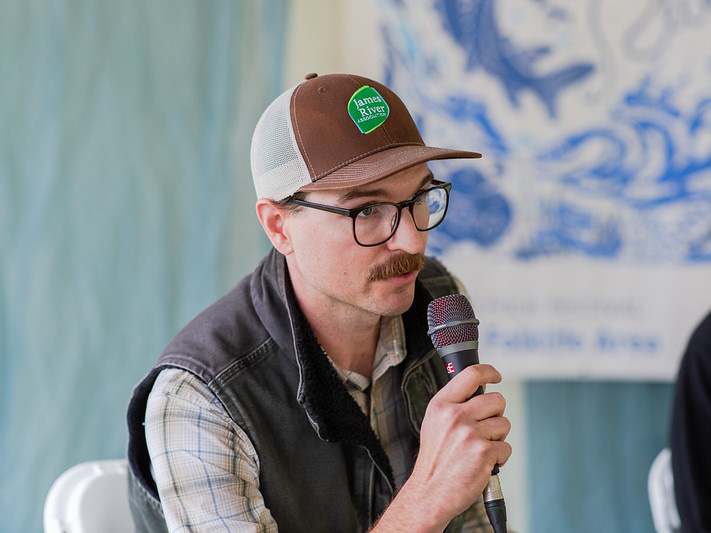
Since Thomas Dunlap (B.S.’11, M.S.’14) transferred to VCU as an undergraduate, he’s always been where he was meant to be: near the James River.
Formerly an intern with the James River Association (JRA) while studying in the School of Life Sciences and Sustainability, his career has come full circle. He now serves as a Riverkeeper with the JRA, expanding upon his education in environmental studies and biology to advocate and protect the river from pollution as well as educate central Virginia residents on how to be better stewards of the river.
Dunlap draws from his passion for the environment around him. As a small child growing up in Colorado, his love for the mountains evolved when his family moved to the east coast where he finally experienced the ocean for the first time. It’s his passion for the natural world that energizes his commitment to protecting the James River watershed for generations to come.
What drew you to VCU to pursue environmental studies?
My family was living in Virginia at the time. I transferred to VCU from UNC Wilmington in North Carolina. The ability to get in-state tuition and the benefits of going to an urban university at the same time while spending time around a quality natural resource like the James River was really appealing to me. I had some friends, who later became colleagues, that were already in the Richmond area, some of whom were VCU students. I gained a liking for some of the offerings at VCU and made the plunge.
I benefited from more than just being a student. I was at the outdoor adventure program where I was one of the student staff, which was really impactful and put me together with many folks who provided me opportunities in a professional or personal capacity. Both as an undergraduate and graduate researcher, I learned some really important skills and made professional connections that continue to aid me today in the work I do today.
 What is your favorite memory from attending VCU?
Graduating is hard to beat. I had some really, really tremendous academic moments where I might have been super proud of some sort of achievement or involvement in a project that was very exciting, or maybe getting to lead or co-write grants that get funded, and you just feel that spark of validation and whatnot that you might get from seeing that other people find merit in your projects and your ability to execute.
Or sometimes it was the opportunity to show up at 8 p.m. for a night class in an urban environment, and you just feel like you're part of the city and you've got people all around you that might lead any number of different types of lives, but there you are all learning about oceanography at 8 p.m. on a Tuesday, which is just kind of its own special interesting thing.
It has very little to do with academics, but I do recall being in the outdoor adventure program and coming back from a weekend trip and getting stuck in a snowstorm on top of the mountain that separates West Virginia from Virginia. We weren't sure if we were going to have to sleep in the van with the 16 of us in it sitting on the top of the mountain that separates the two states, or if we were going to make it back to our friends and family. Sure enough, we did make it back somehow that day, and that was just like a pretty powerful bonding experience for all the folks that were in the outdoor adventure program together to make it back to Richmond from what felt like a slightly perilous moment for all of us at that time.
How did the curriculum in the School of Life Sciences and Sustainability prepare you for your professional work?
So much of graduate school, at least in the sciences, feels a bit like a choose-your-own adventure. You get to self-select on some really excellent courses that are quite unique like literature study courses, field study courses and niche opportunities.
We cobbled together those experiences through what was available to us at the time, whether it was individual pursuits like I already mentioned by opting into and being one of the student workers in the outdoor adventure program and getting some of those real life skills of wilderness first aid. Combining that with the hard science and academic education that’s provided directly from those courses as well, so that you can do things like plan research expeditions and get an understanding of finding the value and establishing background for how your work fits in a larger context, whether for the people or the environment, or both, or even the history of an area.
One example of how that translates to my work today is a better understanding of how a particular community faces historical environmental justice concerns related to ongoing water quality issues that might involve direct water quality monitoring, field protocols and collection practices. I do believe that you get back what you put in on these things, but you can't have success in river ecology as a graduate student with Paul Bukaveckas, Ph.D., if you didn't have success in ecology as an undergraduate with Ed Crawford, Ph.D. If you didn't put in the time to understand what was going on in the first one, you don't get to expand and really benefit from what you might learn in the second one.
 Would you say you felt like there was a natural progression for you going from undergrad into your master's program into your professional life? Did it feel like a straight line or was it a little bit a little bit more of a zigzag?
I'll tell you, it looks a hell of a lot straighter looking back on it, then it felt like going through it. I will say that the combination of the skills I learned and the information I gleaned from being an undergraduate and graduate student, whether I liked it or not, primed me well for the professional career that I have gone on to have.
But also, I like to think that maintaining the open mindedness that can be fostered by going to an urban university like VCU motivated me as much as all that stuff as well. I spent the first half of my professional career so far working directly with the farming community on clean water and best management practices on the landscape. While there's no VCU course about talking to farmers about science, I think that you get the opportunity to work with so many diverse folks at a place like VCU, and each one of those interactions itself is an excellent learning experience. It provides you benefits in your personal life and in your professional career.
Tell me about your current role as a riverkeeper with the James River Association. What does your day-to-day look like?
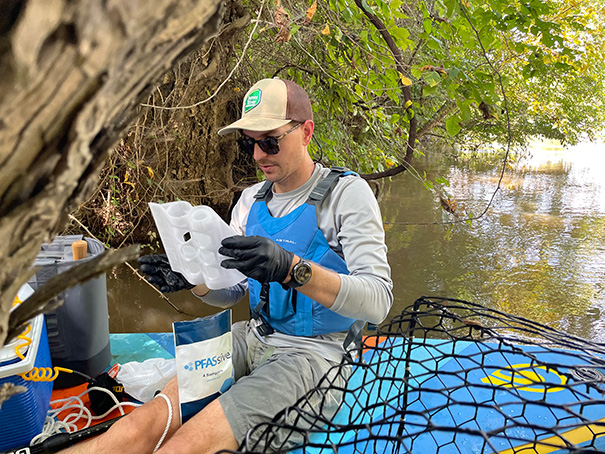
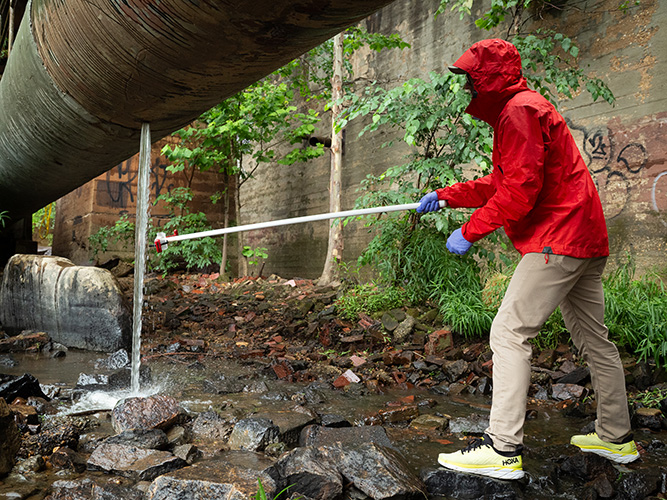
The primary goal of being the riverkeeper is to speak for the river that can't speak for itself. We're a river conservation organization at the James River Association and the James riverkeeper fights for clean water and fights for the communities that live in the watershed and along the waterway. They might live, they might work, they might recreate in the water and I'm the champion for those folks, for the natural resource, for the threatened and endangered species or other wildlife that use it as essential habitat. The James River serves as a drinking water resource for a third of Virginians, and my day-to-day work could include serving as the tip of the spear for regulatory and legislative work that our organization does to protect clean water in the James River watershed and elsewhere throughout the Commonwealth.
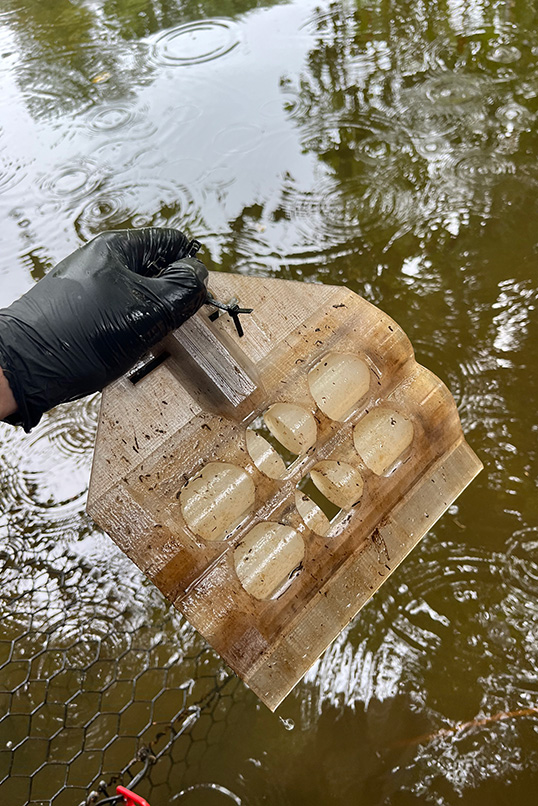
I have some chief duties. I am the lead for enforcement and pollution response work at the organization. If an illegal pollution event or a violation of an issued permit from the state or from some other permitting authority is polluting our waterways, then I'm going to be the lead for my organization on working with the public and with state or federal agencies or local governments on addressing those issues.
I oversee a volunteer program where I train individuals to identify different types of pollution and not only report them to me as the riverkeeper, but also report them to the appropriate agencies, depending on how serious those issues are. Unfortunately, there is a difference between a construction site that's failing its erosion and sediment control practices at the local government level and a nine-mile long oil slick on the James River that flowed through Lynchburg. They require a different response in terms of who needs to be involved to address these issues.
I also partner very closely with our advocacy team on legislative work. You'll see my compatriots at the General Assembly working on legislation for natural resources protection and conservation, including issues that range the gamut from aquatic organism wildlife passage to water supply issues, which impact drinking water for folks all across the Commonwealth.
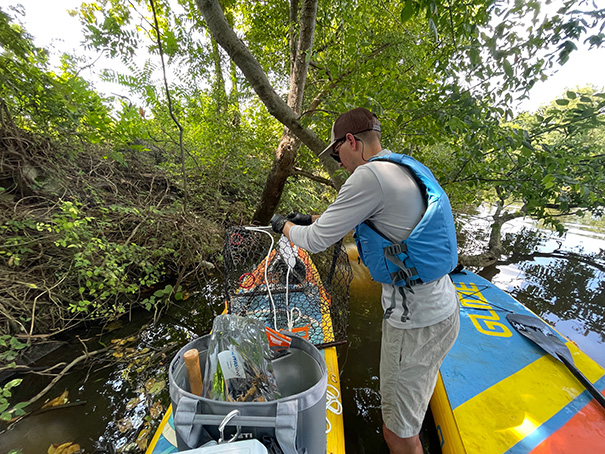 Sometimes I'm helping our education team with their work across the watershed. We have three different river education centers in our watershed: one in Lynchburg, one here in Richmond on Dock Street, and one in at the Neck O’ Land Visitor Contact Station, located at Colonial National Historic Park. We also have two floating classrooms, one near Presquile National Wildlife Refuge where we have about a 40-foot long pontoon boat that we bring students out on for on-the-water programming. We have a similarly sized deadrise vessel down in Hampton that we do on-the-water programming for students in those areas and in various in-the-watershed and on-the-water type programs which include kayaking, canoeing, riverbank studies, dip netting for macro invertebrates and all sorts of stuff. So, occasionally I find myself working with our education team on curriculum or presentations or what have you, or community conservation that goes suburban and urban best management practice implementation, or even a restoration team which does diverse work that can be streamside vegetated buffer plantings, living shoreline installations in the lower James, or even freshwater mussel reintroductions that happen throughout the upper reaches of the watershed.
I am blessed with the ability to assist these expert colleagues in some of these different initiatives pending on what the circumstances call for.
What’s your why?
My why, in the same vein, is that I had these indelible experiences as a small child growing up in rural Colorado that impressed upon me the value of our natural resources and that they were inseparable from my personal history and my memories of being a small child and growing as a conscious human being.
When my family moved from the West to the East Coast, I was introduced to an entirely different environment. You know, the southeast was different from the northeast, which was vastly different than the west, and I was learning to appreciate things that I didn't really have when I was in the mountains, like the wetlands and the coastal plain. It was the first time I'd been to the ocean when my family moved here.
These types of formative experiences, as I grew, I think it just further impressed upon me that these are such important and really unique things at our disposal out our back door or whether it's False Cape State Park in Virginia or it's the Great Dismal Swamp or it's the Appalachian Trail or the beauty of Southwest Virginia, which is like its own unique gem separate from what's going on in the Chesapeake watershed.
 Yet it seems to me that there's so many folks that just kind of, I won't say ignore them, but it's just not part of their daily calculus or what they do go about their lives. I certainly have come to realize it's not that people don't care about stuff, but there's a lot of demands on our attention, and it's something that I certainly give my attention to both personally and professionally.
I found through my undergraduate and graduate experiences making conscious choices to pursue science – as opposed to art – and that I have a technical capability and was able to foster that and grow it. But I also really, really appreciate that human connection that we have, and one of the things I learned was that I could try and forge a path to marry those two concepts together, of getting to take complex concepts and bring them out into the real world to farmers, or people who just want to fish on the river, or maybe even to the people who don't have a direct relationship to the water but they flush a the toilet in the city of Richmond and they're part of our combined sewer system that has a dramatic impact on our watershed in our river here right now.
I get the pleasure of being able to professionally fight for these resources and fight for people who care about these things and for people that don't know that they care about these things, but they might value them, or their future generations might value them even more than we do today.