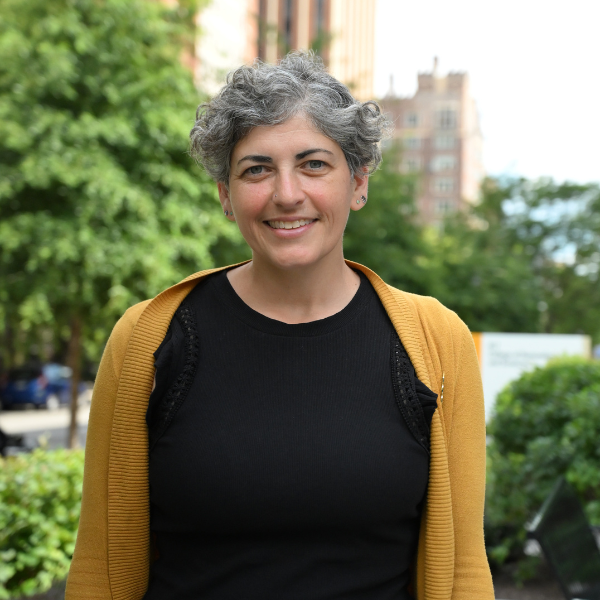
Aliza Ehrlich, Ph.D.
Assistant Professor
Neuromodulation
Cell Biology
Research Interests
Neuromodulation
Cell biology
GPCR trafficking and signaling
Dopamine signaling
Primary cilia
Addiction
Psychiatric disorders
Bio
Aliza Ehrlich is a cell biologist and neuroscientist who joined the School of Life Sciences in fall 2026. Her research career has taken her around the world, beginning with her master’s and doctoral training at Kyoto University in Japan, where she studied how dopamine and prostaglandin receptors interact to produce distinct signaling responses.
She then pursued postdoctoral training at the IGBMC in Strasbourg, France, and at McGill University in Montreal, Canada, under Brigitte Kieffer. There, she developed expertise in mouse genetics, animal behavior, and primary neuron preparations, while investigating how opioids influence cell biology and discovering that select GPCRs, including the mu opioid receptor, concentrate at neuronal primary cilia.
Most recently, Aliza completed her training as a mentored Assistant Professor at UCSF in the laboratory of Mark von Zastrow, where she developed expertise in advanced imaging approaches to study GPCR signaling in living neurons with spatial resolution down to the primary cilium.
The Ehrlich Lab studies how the spatial organization of signaling shapes neurobiology and behavior, with a focus on GPCR trafficking and neuromodulation and the functions of synaptic proteins outside the synapse. This work has implications for understanding addiction and psychiatric disorders.
If these topics interest you, please reach out and join the fun!